
Bento boxes for a healthy meal!
Whether it’s back to school or simply continuing a stint of homemade lunches, you always need inspiration for lunch. To get out of the routine and prepare a balanced lunch, the Bento boxes are in your future. Discover how to fill them up and make sure you’re full.
What’s a Bento?
The Bento boxes are lunchboxes that have several compartments for arranging a selection of dishes. They come to us from Japan as they’ve been a part of their daily routine for a long time now. Creating your lunch this way lets you be ergonomic (the entire meal is contained in one box) and the compartments let you follow Canada’s Food Guide easily. The way your meals are separated also makes you more aware of what you’re eating by enjoying the varied flavours and textures. It could even contribute to weight loss.
There are several types of Bento boxes. We like the more practical ones that have 3 compartments like this one:
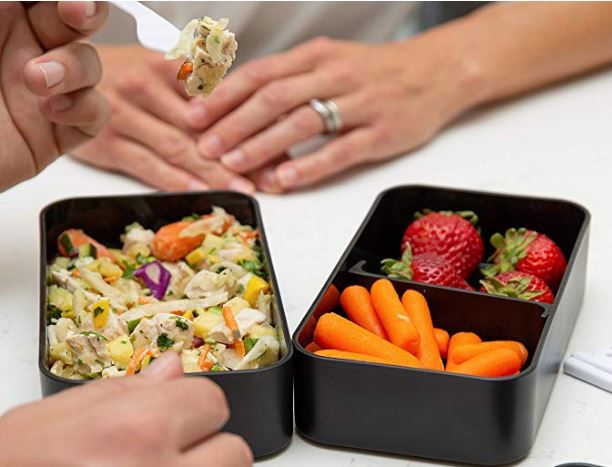
The reason why we propose this model is because it’s nutritional. The Food Guide recommends that ¼ of our plate be made up of protein, ¼ whole grains and ½ of fruits and vegetables. It’s easy to respect these proportions with this type.
In the image above, the box is separated into 2 trays. If you buy a box that has 3 compartments, remember that your meals should be made up of only cold food or only food that must be reheated.
Ideas for a balanced lunchbox
The important thing to know to create a perfect Bento box are the proportions we mentioned earlier and the desire to explore tastes and textures. Here are a few ideas to fill your compartments:

Protein
Making up ¼ of the plate, protein is essential to ensuring we remain satiated longer. Here are some examples:
- Marinated tofu: several marinated tofu recipes say to grill it to enjoy it more. In all, 100 grams of firm tofu contain 8.2 grams of protein.Cajun spiced grilled tofu
- Marinated tempeh: As with tofu, tempeh is even more succulent when marinated. In 100 grams of tempeh, there’s no less than 19 grams of protein. Read our article, Discovering tempeh to find inspiring recipes.
- Hard-boiled eggs: Easy to prepare, hard-boiled eggs contain about 6 grams of protein so you can eat two, no problem. You can also have fun with devilled eggs by seasoning them in different ways:
Deviled eggs with old bay shrimp
- Legumes: Although they’re salads, they’re part of the ¼ protein because legumes are an important source of protein, in addition to containing iron, fibre and vitamins. In fact, ½ cup contains as much protein as 50 to 100 grams of meat. That’s significant. You can roast them to add a little crunch to your Bento box or enjoy them in a salad:
5. Nuts: As they’re rich in protein, but also in good fat, you don’t need to eat much. A serving of 30 grams that contain about 5 grams of protein is the recommended amount.

Whole grains
Apart from the protein, whole grains are also necessary for a balanced meal. They help reduce the risk of several diseases like colon cancer and some heart disease, type 2 diabetes and stroke. Whole grains are good source of fibre essential to your health: women must consume 25 grams per day and men, 38 grams. You must know, however, that fruits and veggies also contain a lot of fibre. Here are a few ideas to make up the ¼ of your Bento box with flavour:
- Quinoa: ½ cup of cooked quinoa contains 1.4 grams of fibre, but also protein and iron which are good if you don’t want to eat meat. You can season it to make it even more delish.
Maple flavoured orzo and quinoa salad
- Brown rice: Much richer in nutrients than white rice, brown rice contains 1.8 grams of fibre in ½ cup. It’s a good whole grain for lunch, just like its cousin wild rice which contains 1.5 grams of fibre in ½ cup. Here are some original ways to prepare it:
Dill shrimp and rice (you can add more shrimp or tofu cubes and fill half of your box with this recipe, which contains the necessary whole grains and proteins).
Seasoned long grain and wild rice mix
- Multigrain pasta: Many pasta manufacturers sell multigrain versions of their products. For example, Catelli sells multigrain fusilli that contains up to 9 grams of fibre. There are a million ways to make it, so here are just a few:
Pasta with red peppers and sautéed vegetables
Pasta salad with sun dried tomatoes, basil and parmesan
- Multigrain bread: Choose a bread made with whole grains, such as these from the Saint-Méthode bakery. You can also choose whole grain crackers. There is a wonderful variety available, so try to choose ones that are high in fibre and low in sodium and fat. Nutritionist Catherine Paul suggests a few in this article.

Fruits and veggies
They have to make up half your plate, so make them appealing. You can eat them raw with hummus as a protein, for example, or sauté them in a drizzle of oil. A good salad or soup can also make them more irresistible. Here are some ideas:
Roman-style broccoli and cauliflower
Creamy broccoli salad (if you add enough nuts, this recipe could make up your protein serving as well)
Cream of broccoli and cauliflower soup
Vegetable hash à la Provençale
Creamy Bruxellian-style vegetables
Vegetable hash with citrus butter
California vegetable tabbouleh
A few possible combinations
It’s great having ideas to fill up the compartments, but we don’t always have the right combinations for Bento boxes. Here are a few that will satisfy you.
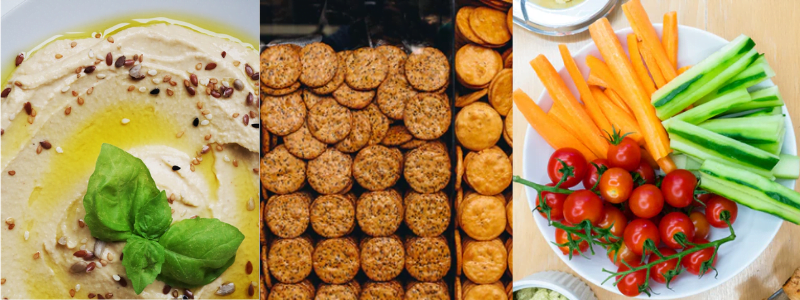
- Hummus (read our article, Hummus: recipes to inspire you) + multigrain crackers + raw veggies
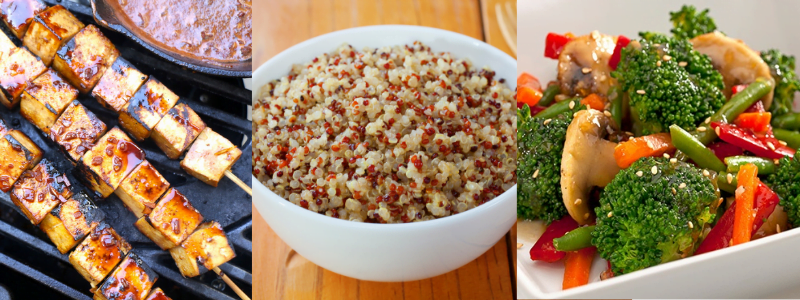
2. Marinated tofu skewers + quinoa (mixed with the leftover marinade) + Asian stir fry infused with green tea and ginger
3. Roasted chick peas + vegetable mac & cheese + vegetables with sun-dried tomatoes

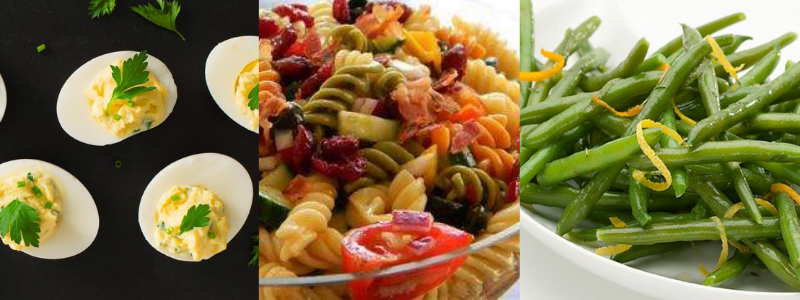
4. Herbed deviled eggs + pasta salad with sun-dried tomatoes and olive pasta + green beans in tarragon butter and lemon zest
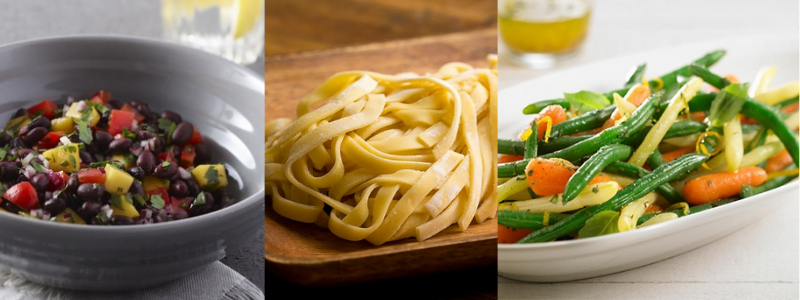
5. Fruity bean salad + multigrain pasta (with a drizzle of olive oil, salt and a pinch of grated Parmesan) + vegetable cocktail with lime & basil
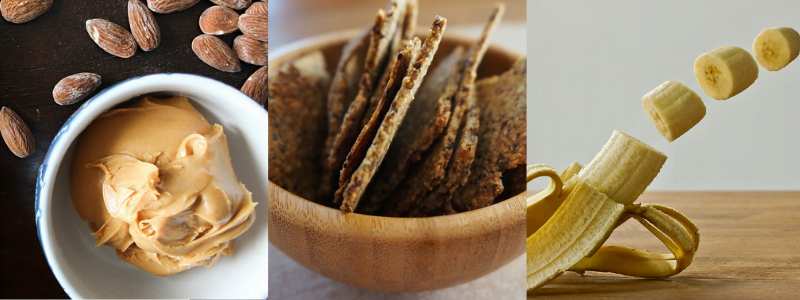
Peanut butter + multigrain crackers + bananas
Be creative and invent your own combo of flavours and textures!
For a healthy protein snack
Bento boxes are convenient for bringing a meal, but they can also be used to store snacks that combine vitamins, fibre and protein. Fill only half of your box or eat a few separate snacks. For more protein, you can add nuts or Greek yogurt, vitamins, fruits and vegetables, and for fibre, a little granola or a homemade cake. That’s it! This saves you from carrying around several different bags or containers unnecessarily.
You’re now equipped to create the most fabulous lunches for your loved ones or bring them to the office or school to impress your peers. All you have to do is let your creativity go and create some beautiful combos. Which one will you start with?